
El Niño Winter 2026-27: What It Means for Your North Idaho Roof
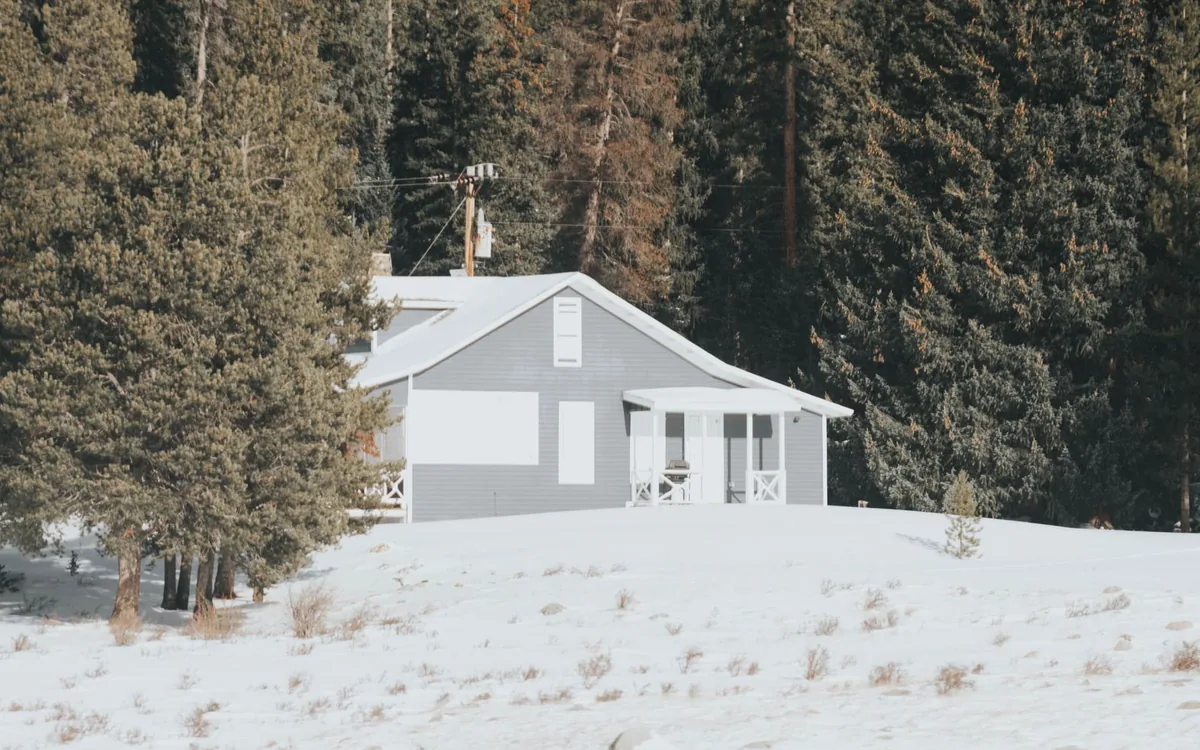
On October 15, 2026, NOAA released its outlook for December 2026 through February 2027. With a very strong El Niño in the Pacific, it favors a warmer than average winter across the northern U.S., including the Pacific Northwest and northern Rockies. Here's what El Niño winters have meant for snow in North Idaho, and why a milder forecast isn't a reason to skip getting your roof ready.
- NOAA's winter outlook favors warmer than average temperatures for the Pacific Northwest and northern Rockies from December 2026 through February 2027, and drier than average conditions for parts of the northern Rockies.
- NOAA doesn't forecast seasonal snowfall. Its outlook says snow is generally not predictable more than a week in advance.
- In El Niño winters from 1949/50 to 2011/12, Coeur d'Alene still averaged 44 inches of snow (86% of normal) and Sandpoint 56 inches (80%), according to the National Weather Service in Spokane.
- Your roof carries each storm, not the season total. Coeur d'Alene's building department figures about 1.25 pounds per square foot for every inch of snow on a roof, and 5.2 for every inch of ice.
- Get your roof checked before the first big storm. Lakeview's roof inspections are free.
On this page
What Does NOAA's 2026-27 Winter Outlook Say for North Idaho?
Warmer than average is favored. NOAA's outlook, released October 15, 2026, shows the greatest chances for a warmer than average winter in the Pacific Northwest, northern Rockies, and Midwest, and leans drier for parts of the northern Rockies. It covers December 2026 through February 2027.
Temperature
Warmer than average is favored across the northern U.S., with the greatest chances in the Pacific Northwest, northern Rockies, and Midwest.
Precipitation
Drier than average is favored for parts of the northern Rockies and the northern Mountain West. The Intermountain West has equal chances of above, near, or below average.
Snowfall
Not forecast. NOAA says snow is generally not predictable more than a week in advance, so the outlook doesn't project seasonal snow totals.
NOAA's outlooks are probabilities, not promises: they give the likelihood that temperature and precipitation will be above, near, or below average. NOAA also expects drought to develop or worsen in parts of the northern Rockies and in eastern Washington. The outlook is updated monthly, and the next update is due November 19, 2026.
Does El Niño Mean Less Snow in North Idaho?
Usually less, not none. The National Weather Service in Spokane studied the winters of 1949/50 through 2011/12 and found that El Niño winters brought North Idaho towns between 64% and 86% of their normal snowfall. That still meant 44 inches in Coeur d'Alene and 56 inches in Sandpoint.
The NWS explains why: in an El Niño winter, the Pacific jet stream tends to send storms south of us into California, while cold air stays bottled up over eastern Canada. But it also warns that "not every El Niño is the same." In Spokane, the El Niño winter of 1968/69 brought 78 inches of snow, well above normal, while the El Niño winters of 1972/73, 1976/77, 1991/92, 1997/98, and 2009/10 each brought less than 20 inches.
The NWS bottom line"While below average snowfall is more likely for an El Niño winter, it is not a guarantee."
Why Does a Milder Winter Still Matter for Your Roof?
Because a season's snowfall total isn't what sits on your roof. Your roof carries the snow and ice from each storm, and one heavy storm, or rain on top of roof snow, can add a lot of weight quickly.
- 1.25 lb
- per square foot for each inch of snow on the roof
- 5.2 lb
- per square foot for each inch of ice
- 40 lb
- per square foot: Coeur d'Alene's design roof snow load
Those figures come from the City of Coeur d'Alene's roof snow handout. By its rule of thumb, 20 inches of snow on a roof weighs about 25 pounds per square foot, and an inch of ice under it brings that to about 30. Homes built in Coeur d'Alene with building permits are designed for at least 40 pounds per square foot, but the city notes that older roofs may not meet that minimum.
The same handout warns that if heavy rain falls on roof snow, the weight can increase rapidly, and that flat roofs (less than a 3/12 pitch) are more of a concern. If you're unsure about your structure, the city recommends consulting an Idaho licensed engineer. For more, see our guide to snow load and your roof in North Idaho.
Can a Warm Winter Still Cause Ice Dams?
Yes. An ice dam needs snow on the roof while the upper roof is above 32°F and the eaves are below freezing. Any winter with snow on the roof and below-freezing weather can set that up, and University of Minnesota Extension says the heat that causes it comes mainly from the house.
Snow melts on the warmer part of the roof, runs down, and refreezes at the colder edge, and the dam grows as more melt feeds it. The long-term fix is keeping house heat out of the attic, which includes stopping warm air from leaking into it. See how to prevent and repair ice dams in North Idaho and our roof ventilation guide for the details.
What Should You Do Before the First Big Storm?
The same prep as any North Idaho winter: clear the gutters, look over the roof from the ground, check the attic for heat and moisture, and get any damage fixed before snow covers it.
- Clear gutters and downspouts
Clogged gutters hold water and ice at the roof edge. See our gutter cleaning guide for safe ways to do it.
- Look over the roof from the ground
Use binoculars to check for missing or lifted shingles, damaged flashing, and loose vent boots. Stay off a wet or icy roof.
- Check the attic
Heat leaking from the house into the attic is the main cause of ice dams, according to University of Minnesota Extension. Look for gaps in the insulation and places where warm air gets in, like around light fixtures.
- Fix damage before the snow
A small leak is easier to fix now than under a foot of snow. Our pre-winter roof checklist walks through each step.
- Book a free inspection
We'll check the shingles, flashing, vents, gutters, and downspouts, and send you photos and a written report in 24 to 48 hours. Learn about our roof inspections here.
If a storm does damage your roof this winter, see what to do in our guide to winter roof damage in North Idaho.
Get Your Roof Checked Before the First Big Storm
Free roof inspections, with photos and a written report in 24 to 48 hours. No pressure, just a straight answer about your roof.
Frequently Asked Questions
Will North Idaho get less snow this winter?
NOAA doesn't forecast seasonal snowfall. El Niño winters have averaged less snow in North Idaho, about 86% of normal in Coeur d'Alene according to the National Weather Service in Spokane, but the NWS says below average snow is not a guarantee.
What is El Niño?
El Niño is a pattern of warmer than normal ocean temperatures along the equatorial Pacific. It shifts the jet stream, and in El Niño winters the Inland Northwest often gets warmer temperatures and less snow than normal.
What does NOAA's 2026-27 winter outlook say for the Northwest?
NOAA's outlook, released October 15, 2026, favors a warmer than average winter in the Pacific Northwest and northern Rockies from December through February, and leans drier for parts of the northern Rockies. The next update is due November 19, 2026.
Do I still need a pre-winter roof inspection if the winter is mild?
Yes. A single heavy storm, or rain on top of roof snow, can load a roof quickly, and ice dams can form in any winter with snow on the roof and below-freezing weather. Lakeview's roof inspections are free.
How much snow can my roof hold?
It depends on how and when it was built. Homes built in Coeur d'Alene with building permits are designed for at least 40 pounds per square foot of roof snow, but older roofs may not meet that. By the city's rule of thumb, each inch of snow adds about 1.25 pounds per square foot and each inch of ice about 5.2.
About this guide. Written by Lakeview Roofing & Restoration, a family-owned roofing company in Rathdrum, Idaho, and an Owens Corning Preferred Contractor with HAAG certified inspectors. Facts in this guide were checked against the sources listed below.
Sources
- NOAA, El Nino looms large over U.S. Winter Outlook (October 15, 2026)
- National Weather Service Spokane, El Nino Pattern and Inland Northwest Snow Stats
- City of Coeur d'Alene Building Department, Should I Shovel the Snow Off My Roof? (handout)
- City of Coeur d'Alene, Adopted Codes and Design Criteria
- University of Minnesota Extension, Dealing with and preventing ice dams