
Ice Dams in North Idaho: Causes, Prevention, and Repair
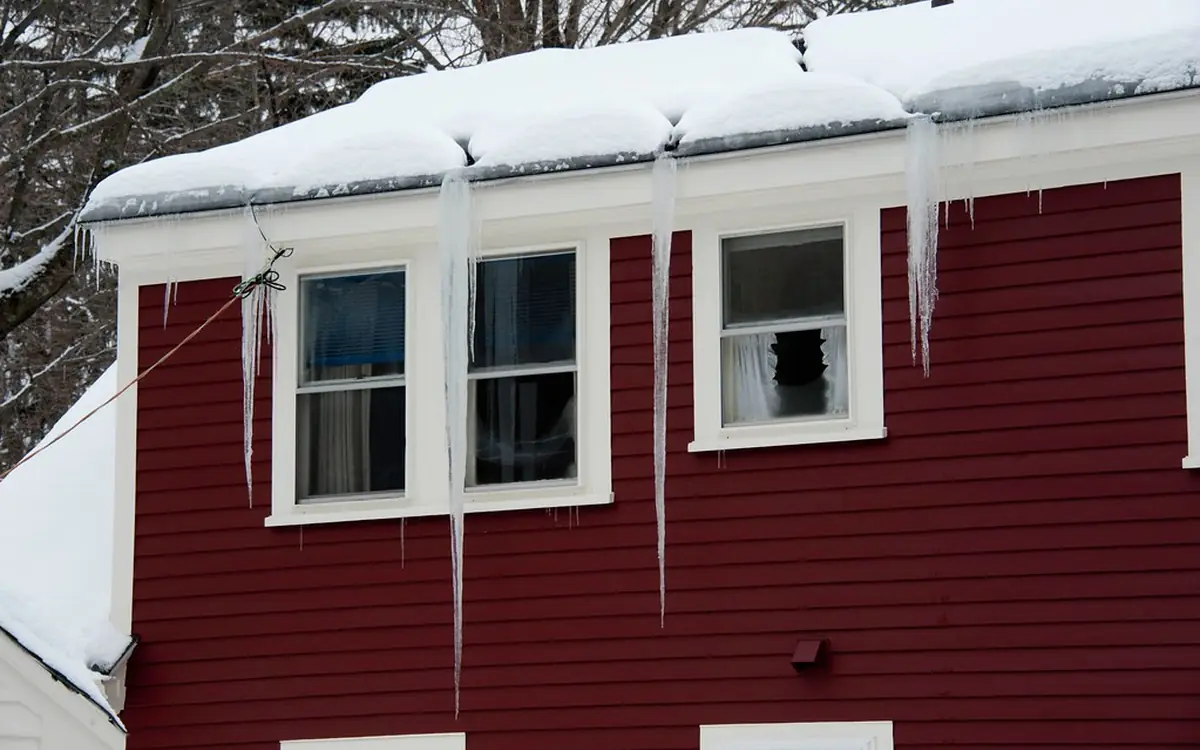
If you've lived through a North Idaho winter, you've seen ice dams: thick ridges of ice along the edge of a roof. They look harmless from the ground, but the water that backs up behind them can leak into walls, ceilings, and insulation.
- Ice dams form when heat from the house warms the upper roof, snow melts, and the water refreezes at the colder edge of the roof.
- The fix is in the attic: seal air leaks first, then add insulation, and keep the attic ventilated.
- Ice barrier at the eaves is the backup if water does back up. Idaho's code requires it where ice dams are a known problem.
- If water is coming inside, channels through the ice let it drain, but only for a few days.
On this page
What Is an Ice Dam?
An ice dam is a ridge of ice at the edge of a roof that traps melting snow. The trapped water can leak under the shingles and into the house, often before you see a stain.
- Heat leaks from the house into the attic and warms the upper roof.
- Snow on the warm upper roof melts and runs down.
- At the cold eave, past the wall line, the water refreezes into an ice dam.
- Meltwater pools behind the dam and can back up under the shingles.
Why Does North Idaho Get So Many Ice Dams?
North Idaho winters bring the conditions ice dams need: snow on the roof, a warm upper roof, and an eave that stays below freezing.
Heavy snow, long cold stretches, and days that swing above and below freezing make that combination common here.
Higher-risk homesOlder homes with less attic insulation, complex roofs with valleys and dormers, and attics with recessed lights, skylights, or heating ducts all get ice dams more often.
What Causes Ice Dams?
Heat escaping from the house into the attic causes ice dams. It gets there through air leaks, thin insulation, and poor ventilation.
Air leaks
Warm air escapes around recessed lights, attic hatches, bath fans, pipes, and wiring. University of Minnesota Extension notes that in many homes this is the main cause of ice dams.
Thin insulation
An under-insulated attic floor lets heat rise straight into the attic and warm the roof deck from below.
Poor ventilation
Without balanced intake and exhaust vents, the heat that reaches the attic stays there. See our ventilation guide.
- R-38
- Ceiling insulation Idaho's energy code calls for in new homes in climate zone 5
- R-49
- Ceiling insulation for new homes in climate zone 6
What Damage Can Ice Dams Cause?
Ice dams can leak water into ceilings and walls, rot the roof deck, grow mold in the attic, and damage gutters and shingles.
Leaks inside
Stained ceilings and walls, peeling paint, and wet insulation.
Rot and mold
Water soaks the underlayment and roof deck, and trapped moisture can grow mold in the attic.
Gutter damage
The weight of ice can bend gutters and pull them loose along with fascia and soffits.
Shingle damage
Ice can crack and loosen shingles along the eaves.
How Do You Prevent Ice Dams?
Prevent ice dams by keeping heat out of the attic: seal air leaks first, then add insulation, and keep the attic ventilated.
The best time to start is before winter. Work through it in this order:
- Seal air leaks into the attic
Seal around lights, fans, the attic hatch, pipes, and wiring. Do this before adding insulation.
- Add attic insulation
Bring the attic up to current levels so less heat reaches the roof.
- Keep the attic ventilated
Keep soffit vents clear of insulation and balance intake with exhaust. Skip powered attic fans: University of Minnesota Extension advises against them for ice dams.
- Install ice barrier at the eaves
During a roof replacement, a self-adhering membrane at the eaves helps keep backed-up water out of the house.
- Keep gutters clear
Clean them in late fall after leaves and needles drop. See our gutter cleaning guide.
Idaho code: ice barrierIdaho's residential code requires ice barrier underlayment where there's a history of ice dams, from the edge of the roof to at least 24 inches inside the exterior wall line. Coeur d'Alene's design criteria require it.
What Should You Do If You Have an Ice Dam Right Now?
Pull snow off the lower roof with a roof rake from the ground, and call a roofer if water is coming inside. Don't chip at the ice.
- Pull snow off the lower roof with a roof rake from the ground
- Rake gently, because scraping down to the shingles can damage them
- If water is coming inside, have channels opened through the dam so water can drain
- Call a roofer to check for damage and plan the long-term fix
- Chip at the ice with a hammer or shovel; it cracks shingles
- Climb onto an icy roof or ladder
- Count on channels in the ice for long; they stop working within days
What Is the Long-Term Fix for Ice Dams?
The long-term fix for ice dams is in the attic: seal air leaks, add insulation, and balance the ventilation.
When it's time for a new roof, that's the chance to add ice barrier at the eaves and upgrade ventilation at the same time.
Not sure what's causing yours? Our roof inspections look at ventilation, insulation, and ice dam risk.
Dealing with Ice Dams?
We'll find what's causing them and fix it, so you're not fighting the same ice dam next winter.
Frequently Asked Questions
What causes ice dams on North Idaho roofs?
Heat escaping from the house warms the upper roof, snow melts, and the water refreezes at the colder edge of the roof. The main sources of that heat are air leaks into the attic, too little attic insulation, and poor ventilation. North Idaho's heavy snow and long cold stretches make ice dams common here.
How do I permanently prevent ice dams?
Seal air leaks between the house and the attic first, then add attic insulation and make sure the attic is ventilated with balanced intake and exhaust. During a roof replacement, ice barrier underlayment at the eaves adds protection if water does back up.
Can I remove an ice dam myself?
You can use a roof rake from the ground to pull snow off the lower roof, but it can damage roofing if you scrape too hard. Don't chip at the ice or climb onto an icy roof. If water is coming inside, a roofer can open channels through the dam so the water drains, and check for damage.
Is ice and water shield required in North Idaho?
Idaho's residential code requires an ice barrier at the eaves in areas with a history of ice dams, extending at least 24 inches inside the exterior wall line. Coeur d'Alene requires it. Ask your roofer about your city's or county's requirements.
About this guide. Written by Lakeview Roofing & Restoration, a family-owned roofing company in Rathdrum, Idaho, and an Owens Corning Preferred Contractor with HAAG certified inspectors. Facts in this guide were checked against the sources listed below.
Sources
- University of Minnesota Extension, Dealing With and Preventing Ice Dams
- International Code Council, 2018 International Residential Code, Chapter 9, Section R905.1.2 Ice Barriers
- City of Coeur d'Alene, Adopted Codes and Design Criteria
- Idaho Building Code Board, IDAPA 24.39.30 (Idaho amendments to the 2018 International Energy Conservation Code, Table R402.1.2)