
Snow Load and Your Roof: What North Idaho Homeowners Need to Know
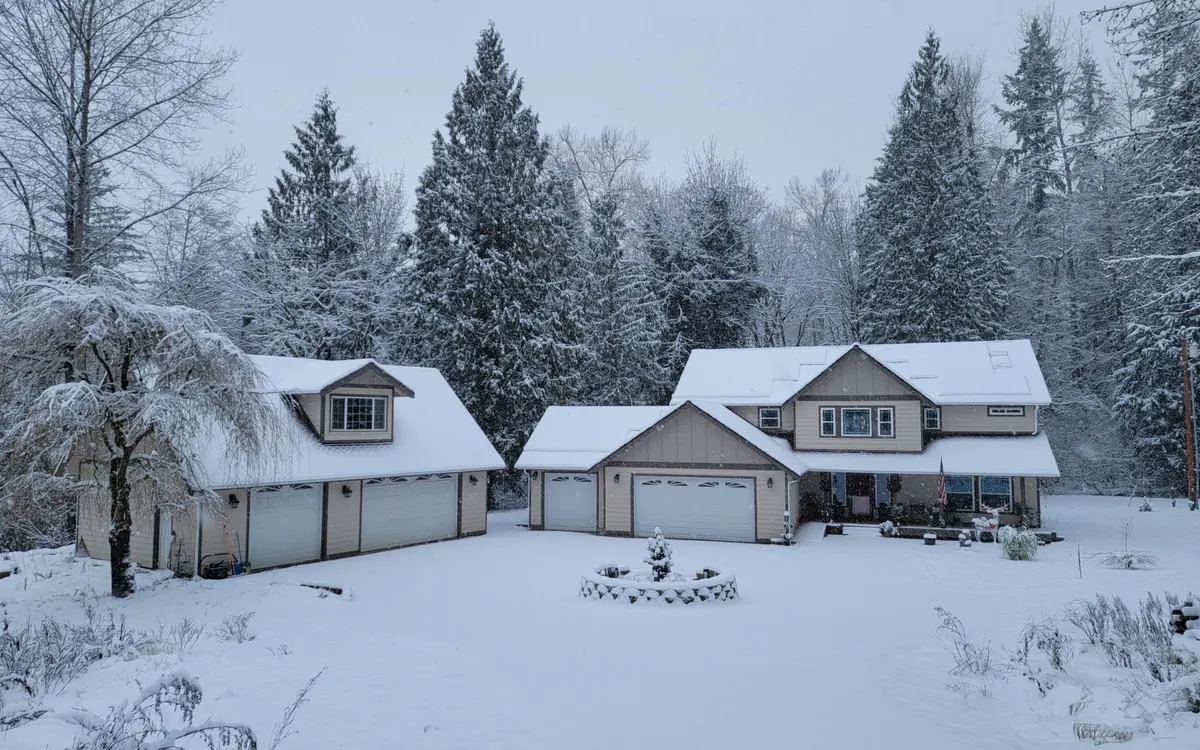
North Idaho gets heavy snow most winters, and a lot of it sits on your roof for days or weeks. If you've looked out at a big snowfall and wondered whether your roof can handle it, here's how snow load works, what Kootenai County and its cities require, and the warning signs to watch for.
- New homes in Kootenai County are designed for a minimum roof snow load of 40 to 60 pounds per square foot, depending on the zone or city.
- Coeur d'Alene's rule of thumb: each inch of snow on the roof weighs about 1.25 pounds per square foot, and each inch of ice about 5.2.
- Rain on top of snow can increase the weight quickly. Saturated snow weighs about 20 pounds per cubic foot.
- A sagging ceiling, cracking sounds, or doors that suddenly stick are reasons to clear the area and call a professional.
On this page
What Roof Is Best for Heavy Snow in Idaho?
A steep roof built for your area's required snow load, with a material that sheds snow and a cold, well-ventilated attic. Standing seam metal sheds snow well, and the trusses and rafters carry the weight, so the structure matters as much as the roofing.
- Pitch: steeper roofs shed snow better. Coeur d'Alene's building department notes that roofs flatter than 3/12 tend to hold more snow moisture
- Material: standing seam metal lets snow slide off, so plan on snow guards over doors and walkways. Architectural shingles also handle snow well when the structure and ventilation are right
- Structure: the trusses and rafters carry the snow's weight, and they need to be sized for the snow load your county or city requires
- Ventilation: a cold, well-ventilated attic reduces ice dams, which hold extra snow and water on the roof
Comparing materials? See our North Idaho roofing materials guide, when to switch to a metal roof, and snow guards explained.
What Are the Roof Snow Load Requirements in Kootenai County?
There's no single roof weight limit for Idaho. Kootenai County and each city set the snow load new homes must be designed for: 40 to 60 pounds per square foot in the county depending on the zone, 40 in Coeur d'Alene and Post Falls, and 40 or 50 in Hayden.
| Where the house is | Roof snow load | Ground snow load |
|---|---|---|
| Kootenai County (outside city limits) | Zone A 40 psf, B 50 psf, C 60 psf; Zone D needs an engineer | Not listed in the county guide |
| Coeur d'Alene | 40 psf | 60 psf |
| Hayden, south of Miles Avenue | 40 psf | 60 psf |
| Hayden, north of Miles Avenue | 50 psf | 70 psf |
| Post Falls | 40 psf | 56 psf |
Roof snow loads run lower than ground snow loads because roofs don't hold snow the way flat ground does. Hayden bases its design loads on the University of Idaho's Ground and Roof Snow Loads for Idaho. Rathdrum and other cities set their own values, so check with your building department for your address.
Older and manufactured homesCoeur d'Alene's building department notes that older roofs may not meet today's 40 psf minimum, and that until recently manufactured homes were designed for a 30 psf roof snow load. The certification label on a manufactured home shows its design load.
How Much Snow Can a Roof Handle?
It depends on the snow load the roof was designed for and how wet the snow is. Using Coeur d'Alene's rule of thumb of about 1.25 pounds per square foot per inch, a 40 psf roof holds roughly 32 inches of average snow, and less if it's wet or icy.
- 1.25 psf
- Per inch of snow on the roof
- 5.2 psf
- Per inch of ice
- 20 lb/cu ft
- Saturated snow
Snow can weigh anywhere from about 1 pound per cubic foot to over 21, depending on its moisture, so the same depth can put very different loads on your roof. By the city's example, 20 inches of snow is about 25 psf, under a 40 psf design load. Add 5.2 psf for each inch of ice.
To check your own roof, Coeur d'Alene suggests cutting a 1 foot by 1 foot square of snow, the full depth, and weighing it in a plastic bag. That weight in pounds is the load per square foot.
When Does Snow Become a Problem?
Snow becomes a problem when it piles up without melting, when rain soaks into it, when wind drifts it into one spot, or when ice dams hold it on the roof.
No melting between storms
During long cold stretches, snow doesn't melt between storms. New snow piles on top, and the bottom layer can compact into ice.
Rain on snow
Coeur d'Alene's building department warns that heavy rain can increase the weight of roof snow rapidly, because the snow soaks up the water.
Drifting and sliding
Wind drifts snow against walls and onto lower roofs, and higher roofs dump snow onto lower ones. Valleys and roof transitions collect more than the open roof.
Ice dams
Ice at the eaves traps snow and water that would otherwise slide off. See our ice dam guide.
What Are the Warning Signs of Snow Overload?
A sagging ceiling, sharp cracking or popping sounds, doors or windows that suddenly stick, a dip in the roof's ridge line, and new leaks during heavy snow are all signs the roof is under too much load.
- Sagging ceiling: the most urgent sign. Leave the area under it and call a professional
- Sharp cracking or popping sounds, especially with visible movement
- Doors or windows that suddenly stick or won't latch
- A dip or bow in the ridge line when you look at the roof from the street
- New leaks during a heavy snow, not after a thaw
If you see these signsMove people and valuables away from the affected area and call a professional. If you're worried about the structure, Coeur d'Alene's building department recommends consulting an Idaho licensed engineer.
Should You Remove Snow From Your Roof?
Usually not. Most roofs handle a normal storm. Consider removing snow when accumulation gets close to your roof's design load, when heavy rain is forecast on top of deep snow, or when you see warning signs, and do it from the ground.
- Use a roof rake from the ground on single-story eaves
- Leave a layer of snow on the shingles so the rake doesn't damage them
- Call a professional for two-story homes and steep roofs
- Walk on a snowy or icy roof
- Scrape down to bare shingles
- Climb a ladder onto an icy eave
Coeur d'Alene's building department warns about the dangers of shoveling or raking a roof: damage to roofing, sliding off the roof, falling from a ladder, overexertion, and snow sliding onto you. The city leaves the decision to each property owner.
How Does a Well-Built Roof Handle Snow?
Through framing sized for the local snow load, solid decking and connections, enough pitch to shed snow, and an attic ventilated to stay cold.
- Framing: trusses and rafters sized for the snow load your building permit requires
- Deck and connections: proper nailing, adequate sheathing, and correct truss connections
- Pitch: steeper roofs shed snow more readily than low-slope roofs
- Ventilation: a cold attic reduces ice dams. See our roof ventilation guide
If you're worried about an older roof, an Idaho licensed engineer can tell you what it's designed to carry. A roof inspection before winter checks the roof, flashing, and ventilation.
Concerned About Your Roof's Snow Load?
We'll inspect your roof for free before the next big storm and tell you what, if anything, it needs.
Frequently Asked Questions
How much snow can my roof hold?
It depends on the snow load your home was designed for and how wet the snow is. In Coeur d'Alene, homes built with permits are designed for at least 40 psf of roof snow load. Using the city's rule of thumb of about 1.25 psf per inch of snow, that's roughly 32 inches, and less if it's wet or icy. Older roofs may not meet today's minimum.
What are the roof snow load requirements in Kootenai County?
Outside city limits, Kootenai County requires a minimum roof snow load of 40, 50, or 60 psf depending on the snow load zone, with an engineer's calculation in Zone D. Coeur d'Alene and Post Falls require 40 psf, and Hayden 40 psf south of Miles Avenue and 50 psf north.
Should I shovel my roof after every snowfall?
No. Most roofs handle a normal storm. Consider removing snow when accumulation nears your roof's design load, when heavy rain is forecast on deep snow, or when you see warning signs. Rake from the ground, leave a layer on the shingles, and don't walk on a snowy roof.
Can I add support to my roof for more snow load capacity?
Yes. An Idaho licensed engineer can design reinforcement, such as added posts, beams, or sistered rafters, to increase what the roof can carry. It's often done during a renovation or attic conversion.
Are metal roofs better for snow load?
Metal roofs shed snow, which reduces how long the load sits on the structure. Metal doesn't make the framing stronger, so plan on snow guards to control sliding snow over doors and walkways.
What roof is best for heavy snow in Idaho?
A steep roof built for your area's required snow load, with a material that sheds snow and a cold, well-ventilated attic. Standing seam metal sheds snow well, with snow guards over doors and walkways. The framing carries the weight, so the structure matters as much as the roofing.
About this guide. Written by Lakeview Roofing & Restoration, a family-owned roofing company in Rathdrum, Idaho, and an Owens Corning Preferred Contractor with HAAG certified inspectors. Facts in this guide were checked against the sources listed below.
Sources
- Kootenai County, Residential Building Guide Information (snow load zones)
- City of Coeur d'Alene, Adopted Codes and Design Criteria
- City of Coeur d'Alene Building Department, Should I Shovel the Snow Off My Roof?
- City of Hayden, Building Department Design Criteria
- City of Post Falls, Current Codes and Design Criteria