
Gutter Cleaning in North Idaho: Why It Matters Here, What to Clean, and When to Call a Pro
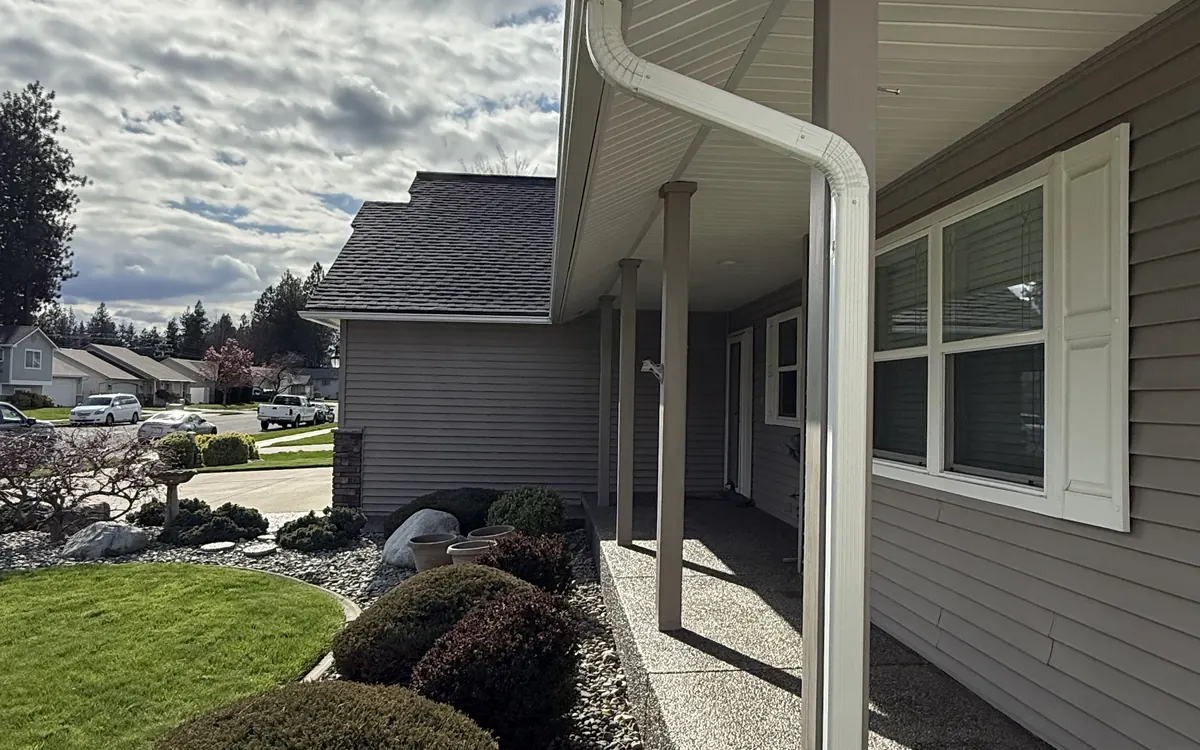
In North Idaho, fall brings pine needles, leaf drop, and the first real rains all at once. A gutter that worked fine in August can be plugged by October, and water that can't drain before the freeze has nowhere to go all winter.
Here's what to clean, when to clean it, what you can safely do from a ladder, and when to call a pro.
- Clean gutters at least once a year in late fall, after the leaves are down and before the first hard freeze. Under pines, plan on cleaning more often.
- A full cleaning clears the gutters and every downspout, flushes the system, and checks the hangers, the slope, and where the water goes.
- Make sure each downspout carries water away from the house, not onto a splash block against the foundation.
- Single-story gutters can be a DIY job with a ladder stabilizer and a helper. Two-story, steep, or over concrete: hire a pro.
On this page
Why Do Gutters Matter More in North Idaho?
Pine needles, fall rain, and freezing weather. Needles can mat together and plug downspouts, and water left in a clogged gutter can freeze, adding weight and pulling the gutter away from the fascia.
Pine needles
Ponderosa and other pines cover much of the region. Their needles can pack into dense mats that plug the downspout opening, so a once-a-year cleaning may not be enough under a heavy pine canopy.
Freezing water
Water sitting in a clogged gutter freezes and expands overnight. Over a winter, the extra weight can loosen the hangers so the gutter no longer slopes toward the downspout.
Snowmelt with nowhere to go
Clean gutters help meltwater drain off the roof edge. They don't prevent ice dams, which start with heat from the house, but a plugged gutter full of ice makes the edge worse.
Water at the foundation
A downspout that dumps water right against the house soaks the soil next to the foundation and basement wall every time it rains or the snow melts.
How Often Should You Clean Gutters in North Idaho?
It depends on your trees. Once a year in late fall for an open lot, twice a year with mixed trees, and more often under heavy pine.
| Your lot | How often | When |
|---|---|---|
| Open lot, few trees | Once a year | Late fall, after the leaves are down |
| Mixed trees or moderate canopy | Twice a year | Late spring and late fall |
| Heavy pine or wooded lot | Three to four times a year | Check every season; pines shed year-round |
Gutter guards cut down on cleaning but don't end it. Fine debris and granules still collect on top, and cheap screens can let needles slip underneath. If you have guards and haven't looked at them in a couple of years, check them this fall.
What Does a Full Gutter Cleaning Include?
Clearing the gutter run, clearing every downspout, flushing the system with a hose, checking the hangers and slope, and making sure the water ends up away from the house.
- Remove the debris
Scoop out leaves, needles, twigs, granules, and nests into a bucket, or blow them out if the debris is dry.
- Clear every downspout
Run water through from the top or open it at the elbow. If a downspout doesn't run full, it isn't clear yet.
- Flush the system
Run a garden hose from the far end of the gutter toward the downspout. Water that pools shows a low spot.
- Check the hangers and slope
The gutter should hold a straight line with a gentle slope toward each downspout. Sagging or pulled-away sections need new fasteners before winter.
- Check where the water goes
Each downspout should carry water out into the yard, away from the foundation.
Where Should Your Downspouts Drain?
Out into the yard, away from the foundation. A splash block that ends right against the wall leaves the soil next to the house soaked every time it rains or the snow melts.
The fix is usually simple: a flexible or rigid extension that carries water well out from the wall, or a buried solid pipe to a pop-up emitter in the yard. Parts are inexpensive, and it's one of the most useful fall projects on the house.
Can You Clean Your Own Gutters Safely?
On a single-story home with level ground, yes, with a ladder stabilizer, a helper at the base, and dry weather. Anything taller, steeper, or over concrete is a job for a pro.
- Use a ladder stabilizer, so the ladder rests against the roof instead of the gutter you're cleaning
- Set the angle right. OSHA's ladder rule for workers puts the base about one-quarter of the ladder's working length out from the wall, roughly 1 foot out for every 4 feet up
- If you'll step onto the roof, OSHA requires the ladder rails to extend at least 3 feet above the edge
- Keep three points of contact, and move the ladder instead of leaning sideways
- Have a helper at the base
- Work only on dry days. If there's frost on the rungs or the roof is wet, wait
- Keep yourself and the ladder well clear of the power line running to the house
When Should You Call a Pro?
When the eaves are two stories up, the roof is steep, the gutter is over a walkway, driveway, or porch, there's moss where the ladder would sit, or the gutter is already pulling away from the fascia.
Gutter trouble often shows up next to roof trouble: a lifted shingle above the gutter line, flashing pulled away at the roof edge, or rotted fascia or soffit. Lakeview's free roof inspections check the gutters and downspouts along with the roof. If your gutters are old, sagging, or leaking at the seams, see our seamless gutter installation service.
How Do Gutters Connect to Ice Dams and Snow?
Clean gutters help meltwater drain, but they don't prevent ice dams. Ice dams start when heat from the house melts snow higher on the roof; the long-term fix is attic insulation and ventilation.
Read our ice dam guide for the full picture, our flashing guide for the roof edge, and snow guards explained if snow sliding off a metal roof could hit your gutters. For the rest of your fall list, see the North Idaho pre-winter roof checklist.
Schedule Your Free Pre-Winter Inspection
We'll check the roof, the flashing, and the gutters and downspouts, and tell you straight what needs attention before the first snow. No obligation, no pressure.
Frequently Asked Questions
How often should I clean my gutters in North Idaho?
Twice a year for most homes: once in late spring and once in late fall, after the leaves are down but before the first hard freeze. Under heavy pine, plan on three to four times a year. An open lot with few trees can usually get by with one cleaning in late fall.
When should I clean my gutters before winter?
In late fall, after the leaves are down and before the first hard freeze. If you miss that, a dry day in early November is far better than leaving wet debris in the gutters all winter.
Do gutter guards mean I never have to clean again?
No. Guards reduce how often you clean, but fine debris and granules still collect on top and need to be brushed or rinsed off. Cheap screens can let pine needles slip underneath.
Where should my downspouts drain?
Out into the yard, away from the foundation. A splash block right against the wall usually isn't enough. Use an extension or a buried pipe to a pop-up emitter.
Is it safe to clean my own gutters?
On a single-story home with level ground, yes, if you use a ladder stabilizer, set the ladder at about 1 foot out for every 4 feet up, keep three points of contact, and have a helper. Two-story homes, steep roofs, gutters over concrete, and mossy roofs are jobs for a pro.
Do clean gutters prevent ice dams?
No. They help meltwater drain, but ice dams start with heat from the house melting snow higher on the roof. Attic insulation and ventilation are the long-term fix.
About this guide. Written by Lakeview Roofing & Restoration, a family-owned roofing company in Rathdrum, Idaho, and an Owens Corning Preferred Contractor with HAAG certified inspectors. Facts in this guide were checked against the sources listed below.