How Long Does a Roof Last in North Idaho? Lifespan by Material
Knowing how long your roof will last is a budgeting decision as much as a roofing one. North Idaho's snow, wind, freeze and thaw, and summer sun all wear on a roof. Here's what we see on roofs in our area, material by material, and what shortens or extends roof life here.
- Architectural asphalt shingles last 20 to 25 years in North Idaho. Older 3-tab shingles often wear out at 15 to 20.
- Standing seam metal lasts 40 to 70 years. Exposed fastener metal lasts 20 to 30, with fastener upkeep along the way.
- A manufacturer's warranty is not a lifespan. Owens Corning's "lifetime" coverage is for manufacturing defects while you own the home.
- Good ventilation, ice barrier at the eaves, a careful install, and prompt repairs do the most to help a roof reach the long end of its range.
On this page
How Long Does Each Roofing Material Last in North Idaho?
Architectural shingles last 20 to 25 years here, 3-tab shingles 15 to 20, exposed fastener metal 20 to 30, and standing seam metal 40 to 70. These are the ranges we see on roofs in our area.
| Material | Expected lifespan | Best for |
|---|---|---|
| 3-tab asphalt shingles | 15 to 20 years | Rentals, outbuildings, short ownership |
| Architectural asphalt shingles | 20 to 25 years | Most homes |
| Exposed fastener metal | 20 to 30 years | Shops and outbuildings |
| Standing seam metal | 40 to 70 years | Long-term homes, snowy or windy sites |
3-tab shingles
A thin, flat, single-layer shingle. It's the budget option, and it's more exposed to wind lift and wear than architectural shingles. We don't recommend it for North Idaho homes.
Architectural shingles
Thicker, heavier, and layered for a dimensional look. With a good install and a ventilated attic, 20 to 25 years is realistic here.
Exposed fastener metal
Also called AG panel. The screws go through the face of the panels, and their washers need periodic inspection so they don't leak.
Standing seam metal
Concealed fasteners and continuous panels from ridge to eave. It sheds snow and needs little maintenance over a long life.
Comparing the two most common choices? Read asphalt vs. metal roofing in North Idaho, architectural vs. 3-tab shingles, or our North Idaho roofing materials guide.
Is a Shingle Warranty the Same as Its Lifespan?
No. A warranty describes what the manufacturer will cover, not how long the roof will last on your house. Owens Corning says its lifetime coverage means the warranty covers manufacturing defects for as long as you own a single-family home.
How long a roof lasts depends on the climate, the attic, the installation, and the upkeep. That's why we give you the range we see on local roofs rather than a number from the wrapper.
What Shortens Roof Life in North Idaho?
Freeze and thaw, heavy snow, summer sun, a poorly ventilated attic, and small problems left unrepaired.
Freeze and thaw
Water that gets into small gaps freezes and expands. Over years, that loosens shingles, opens flashing seams, and works exposed fasteners loose.
Snow weight
By the City of Coeur d'Alene's rule of thumb, each inch of snow on a roof weighs about 1.25 pounds per square foot, and saturated snow about 20 pounds per cubic foot. See our snow load guide.
Sun
CertainTeed notes that UV breaks down the protective granules on shingles, leaving the asphalt to turn brittle and crack. Heavy granules in the gutters are a sign.
Poor ventilation
A hot, damp attic wears a roof from below and helps ice dams form. Owens Corning's install instructions require ventilation that meets local code.
Deferred repairs
A loose flashing, a cracked pipe boot, or a few missing shingles is a small repair. Left alone, it can become water damage inside.
What Helps a Roof Last Longer?
Balanced attic ventilation, ice barrier at the eaves, a careful installation, a yearly inspection, and fixing small problems right away.
- Ventilation: soffit intake and ridge exhaust keep the attic close to the outside temperature. A reroof is the most practical time to correct it. See our roof ventilation guide
- Ice barrier: self-adhering membrane at the eaves, which Coeur d'Alene and Post Falls both require, keeps ice dam water out
- A careful install: correct nailing, flashing, and detailing at every opening matter as much as the material. See roof replacement
- A yearly inspection, and another after a big storm. Lakeview's roof inspections are free
- Prompt repairs: most common roof repairs, like leaks, missing shingles, and flashing, cost $400 to $900
What Should You Check Every Year?
Get a professional inspection, clean the gutters, look at the flashing and pipe boots, trim branches back from the roof, check the attic for frost or damp, and watch for moss.
- Professional inspection
Once a year, and after any storm with high wind, heavy snow, or hail.
- Clean the gutters
At least once a year in late fall, and more often under pines. See our gutter cleaning guide.
- Look at the flashing
From the ground, check around chimneys, walls, skylights, and pipe boots for anything lifted, cracked, or rusted. See roof flashing explained.
- Trim branches
Keep branches back from the roof so they don't drop debris, hold moisture, or scrape the shingles.
- Check the attic
If you can get in safely on a cold day, look at the underside of the roof deck. Frost, damp, or mold points to a moisture or ventilation problem.
- Watch for moss
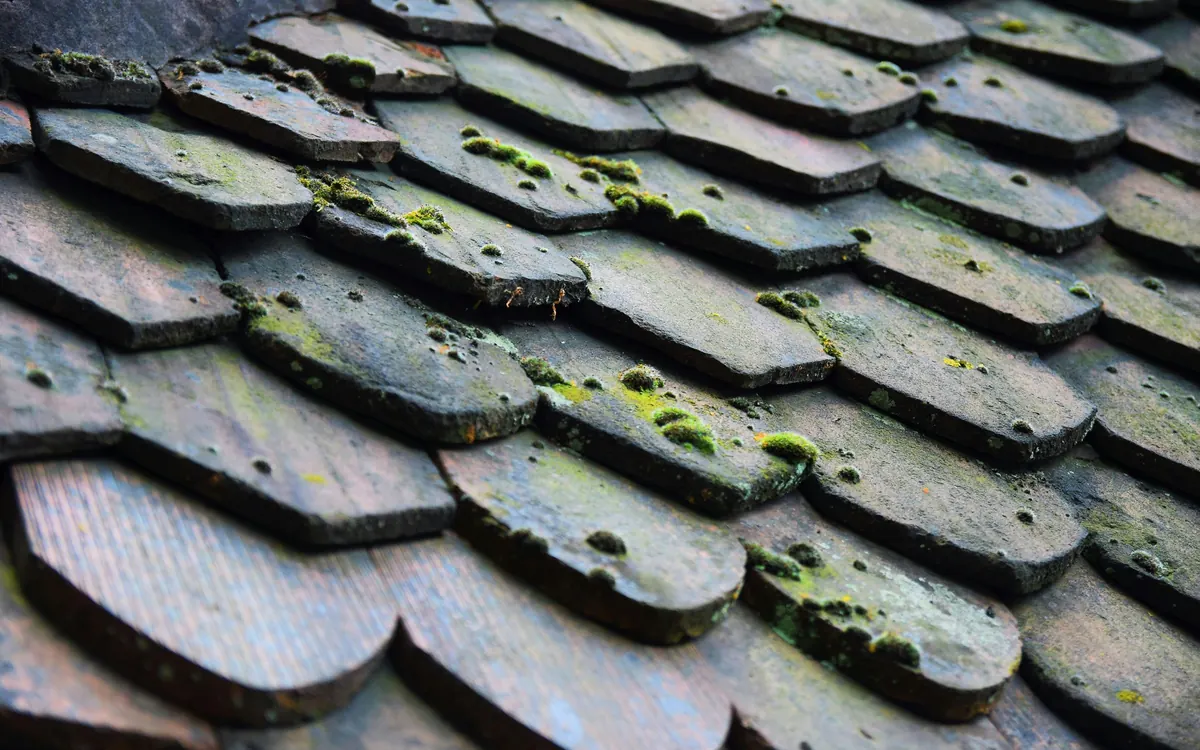
Moss grows best on shady, north-facing slopes and holds moisture against the shingles.
For the whole process, from choosing a material to installation and upkeep, see our complete guide to a new roof in North Idaho.
How Old Is Your Roof?
We'll inspect your roof for free and give you a straight assessment of how much life it has left.
Frequently Asked Questions
How long does a shingle roof last in North Idaho?
Architectural asphalt shingles last 20 to 25 years in North Idaho with a good install and a ventilated attic. Older 3-tab shingles often wear out at 15 to 20 years.
How long does a metal roof last in North Idaho?
Standing seam metal lasts 40 to 70 years. Exposed fastener metal lasts 20 to 30 years, and its screw washers need periodic inspection.
How do I know if my roof is at the end of its life?
Look for curling or buckling shingles across the roof, heavy granules in the gutters, daylight through the roof boards in the attic, a sagging roofline, or leaks in more than one spot. If an asphalt roof is 20 years old or more, have it inspected even if it looks fine from the ground.
Can repairs extend my roof's life?
Often. If the roof is under 15 years old and the damage is in one area, like a few missing shingles, a cracked pipe boot, or failing flashing, a repair can keep it going. If the roof is past its expected lifespan and worn across the whole surface, replacement is usually the better investment.
Is a 50-year or lifetime shingle going to last that long?
Not necessarily. A warranty term describes coverage, not lifespan. Owens Corning's lifetime coverage, for example, covers manufacturing defects for as long as you own a single-family home.
How often should I have my roof inspected in North Idaho?
Once a year, and after any major storm with high wind, heavy snow, or hail. Lakeview's roof inspections are free throughout Kootenai County.
About this guide. Written by Lakeview Roofing & Restoration, a family-owned roofing company in Rathdrum, Idaho, and an Owens Corning Preferred Contractor with HAAG certified inspectors. Facts in this guide were checked against the sources listed below.
Sources
- Owens Corning, Roofing Warranties (frequently asked questions)
- Owens Corning, Duration Series Shingles Installation Instructions (ventilation)
- CertainTeed, Sun Exposure and Your Roof: What UV Rays Do Over Time
- City of Coeur d'Alene Building Services, Should I shovel the snow off my roof? (handout)
- City of Coeur d'Alene Building Services, Current Adopted Codes and Design Criteria (PDF)
- City of Post Falls Building Division, Current Adopted Codes and Design Criteria (PDF)